
Understand the pattern without reducing the child.
Explore uneven development, school mismatch, twice-exceptionality, and day-to-day support with language that leaves room for uncertainty.
A behavior can matter without explaining the whole child.
Giftedness, explained with care—for parents, educators and gifted adults.
The same child can thrive in one setting and struggle in another. Pace, noise, relationships and expectations can all change what works.
A useful challenge stretches what a child is ready to explore. It can mean greater depth, a different question or room to follow an interest—not simply more work.
Support responds to what is difficult right now. Clearer steps, more time or help getting started can sit alongside advanced ability.
Children need places where they feel accepted and can ask for help. Being understood matters as much as being challenged.
Featured from YouTube
Giftedness is useful only when it helps adults see a person more accurately and match challenge and support to what that person actually needs.
“The child matters more than the status attached to the label.”
When has a label clarified a real need—and when has it hidden one?
Keep public comments general. Please do not identify a child, school, assessment, or family.Start here
Begin with the ideas that shape everything we publish: dignity, evidence, need, and fit.
Struggle does not cancel strength. Strength does not cancel struggle.
Boredom is information—not proof of giftedness or laziness.
Need and fit matter more than prestige.
Choose your way in
You do not need a perfect label to ask better questions about challenge, support, and fit.
Explore uneven development, school mismatch, twice-exceptionality, and day-to-day support with language that leaves room for uncertainty.
A behavior can matter without explaining the whole child.
Explore pace, depth, underidentification, disability, belonging, and the limits of judging a learner from surface behavior alone.
Strength should not erase need. Need should not erase strength.
Explore late recognition, the ‘smart kid’ role, educational mismatch, and adult identity with care—not nostalgia, blame, or diagnosis-by-post.
A label may clarify part of a life. It should not flatten the rest.
Inside the learning process
Start with an everyday question.
Look closely at the evidence.
Distinguish findings from assumptions.
Make the ideas useful in daily life.
Update what we think as we learn.
Questions we’re exploring
Advanced readiness in one area does not automatically create the same readiness everywhere else. Unevenness can help us ask better questions; it cannot diagnose a person or explain every difficulty.
The strongest ability is not the whole person.
Giftedness can coexist with ADHD, autism, a learning disability, or another support need. Similar surface behaviors can have different explanations, and a short story cannot determine which one applies.
Do not use strength to erase difficulty—or difficulty to erase strength.
School fit involves more than workload. Pace, depth, executive demands, sensory needs, and belonging can each matter—and they may call for different responses.
Match challenge to readiness. Match support to need. Review what changes.
Growing support for parents
We’re building a growing space to support parents: clearer ideas for everyday moments, things to explore together, and digital tools that help you find a small next step.
Join the waiting list for opportunities to try the first tools as they become ready.
These are two early experiments in a broader effort to support parents. Both are still in development.
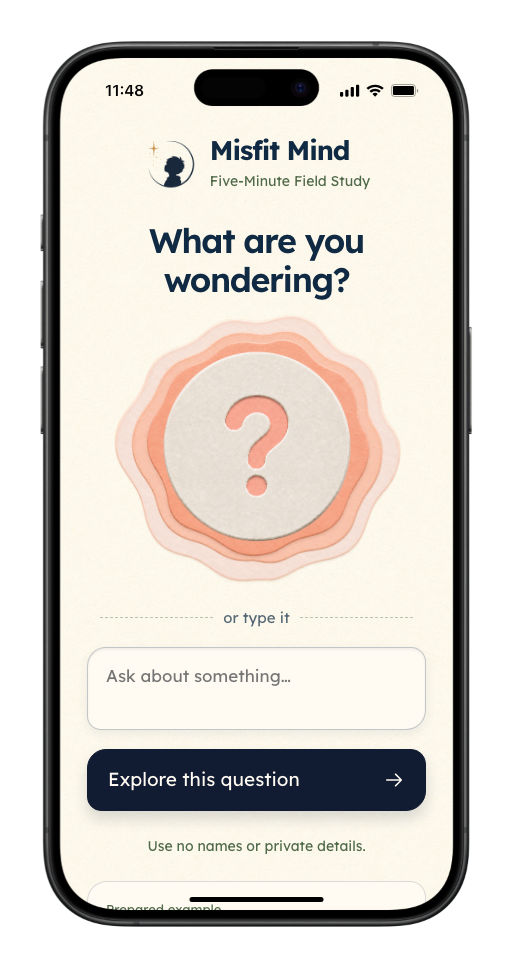
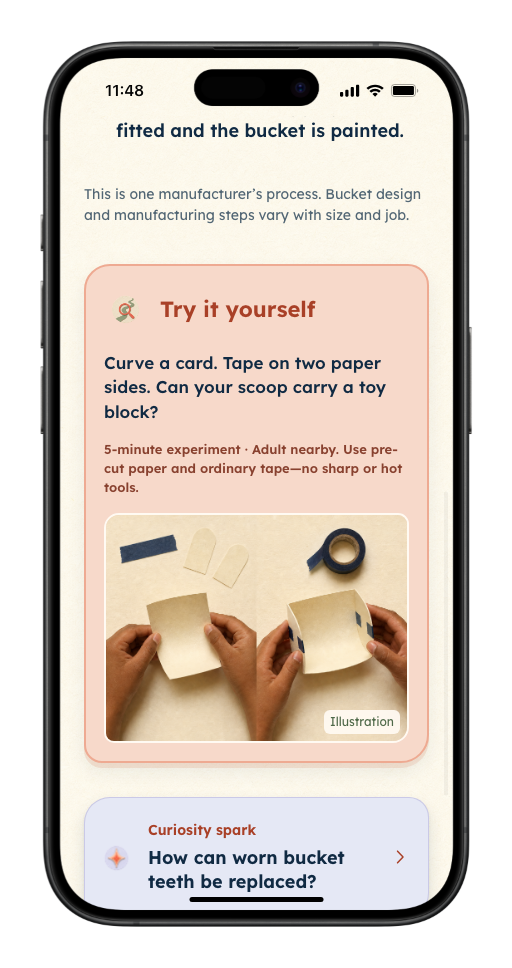
Five-Minute Field Study
Start with something your child is wondering about. Explore a short visual explanation, look at the clues, then try something together.
Child Understanding App
A private space to revisit what you noticed, consider what might help, and choose a small next step. You decide what each observation means and what to keep.
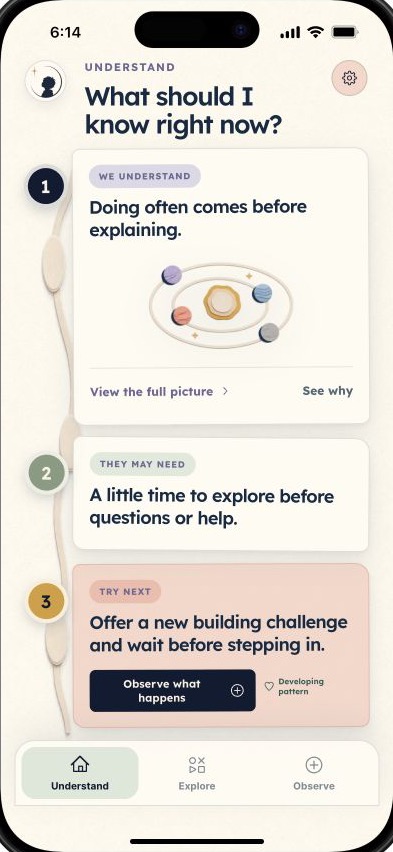
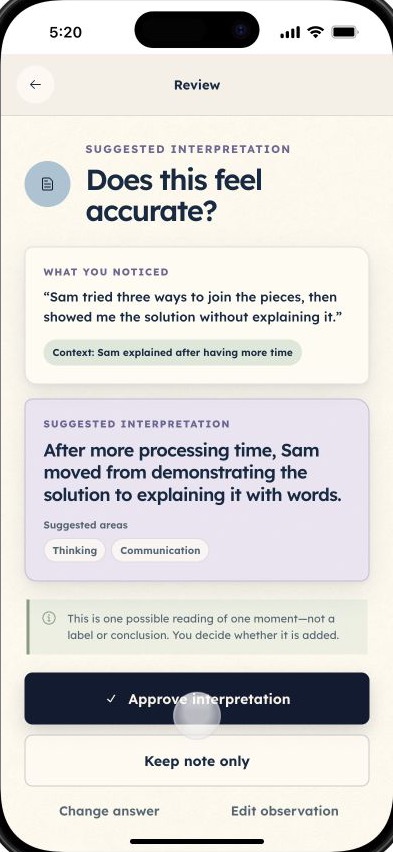
Working titles. No public release date yet. These tools do not diagnose children or provide individual professional advice.
Our publishing promise
They decide what we publish—and what we deliberately keep private.
Read the full charterFamily experience may inspire a question. Identifying material stays private; public examples are generalized, composite, symbolic, or evidence-only.
We distinguish official guidance and research from interpretation, hypothesis, and personal experience—and revise when better information arrives.
Giftedness is not a trophy or guarantee. We focus on development, dignity, need, and fit—not superiority theatre.